- Just One Pivot
- Posts
- Pivot #61: The Shinrin-Yoku Principle
Pivot #61: The Shinrin-Yoku Principle
The medicine of silence, nature, and the still small voice you've been too busy to hear

Maria Keckler, Ph.D.
February 16, 2026 • Reading Time: 4 minutes

Welcome to Just One Pivot. If this was sent to you, subscribe here and get a free copy of my Builder’s Starter Kit. — Maria Keckler
Hi Friend,
Last weekend my husband, daughter, and I walked through Airlie Gardens in Wilmington, North Carolina. Live oaks draped in Spanish moss, a ten-acre lake, the deafening quietness hidden between roots that have lived longer than you have. We had no agenda and nowhere to be. Just slow steps, deep breaths, and open ears.
And then, somewhere between the oaks and the water, I felt the sudden, inexplicable need to cry. I wasn't sad, or so I thought. It felt more like a gentle pressure rising.
I didn't cry. But the urge surprised me.
I think it was my body responding to something it rarely gets: genuine stillness. A few minutes without urgency or noise or the low hum of things I need to do. Just moss and light and old trees that have no opinion about my goals or to-do list.
My daughter, who has a gift for finding exactly the right thing at exactly the right moment, introduced me to a show called Alone while we were there. Maybe you've seen it.
Ten survival experts are dropped individually into one of the most remote places on earth, like the Arctic Circle, where grizzly bears outnumber visitors and winter dares you to stay. Each contestant lands in a different location, carrying only ten survival items. They film themselves. The last one standing wins $500,000.
I came home and watched three episodes before I realized what time it was.
I expected and was captivated by the combination of human skill, drive, and wilderness strategy: the building of brilliant shelters, ingenious traps, the pure drama of humans pitting their skill against a landscape that doesn't care whether they live or die.
What I didn't expect were the men, alone in the dark, weeping.
One contestant has stayed with me since. He was skilled, everything a survival expert should be. His shelter was solid. His food systems were in place. By every measurable standard, he had what it took to go the distance. But he was among the first to tap out, not because he was injured or had run out of resources.
He tapped out because he couldn't outrun himself anymore.
Out there in the Arctic, with no noise to fill the silence, the emotions he had spent years pushing down came roaring up with nowhere to go. And in that solitary clarity, he saw a priority that mattered more than half a million dollars.
He talked about his son. A boy who could experience “big feelings” and show them without apology. He had never been able to relate to him, or to his wife, or to his other children.
And in that vast, indifferent wilderness, alone with himself for what may have been the first time in his adult life, he finally did. He saw what the years of pushing down the voices within had cost him. And he chose to go home to start repairing his relationships before it was too late.
Tapping out, for him, was the win.
The Shinrin-Yoku Principle
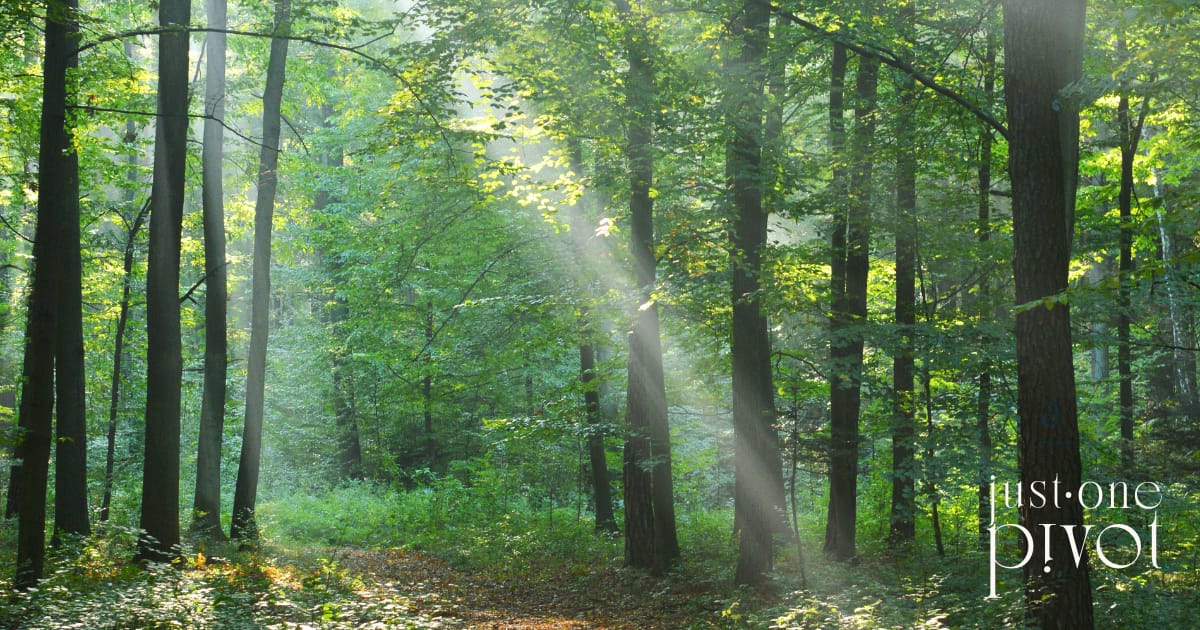
There is a Japanese, evidence-based practice and therapeutic principle called shinrin-yoku. The word translates literally as "forest bathing". Shinrin means forest, Yoku means bath.
Shinrin-yoku isn’t exercise. It's not hiking. It's not a workout you log on an app. It is simply being in nature, letting the forest bathe you through all five senses. The sight of green. The sound of wind through leaves. The smell of soil and wood. The particular quality of light that comes through a canopy.
The Japanese Ministry of Health began investing in formal research on shinrin-yoku in the early 1980s, and what the science has produced since is striking.
Forest bathing reduces stress hormones, specifically cortisol, adrenaline, and noradrenaline, measurably and consistently. It lowers blood pressure and heart rate. It activates the parasympathetic nervous system, the one responsible for rest and restoration, while quieting the sympathetic nervous system or your fight-flight-freeze response.
The Pivot
We have built our lives with extraordinary precision around never being alone with ourselves, quiet enough to hear what's actually going on inside.
Even in the moments we call solitude, there is always a buffer. A podcast during the walk. Music while we cook. Scrolling in the three minutes before sleep finally comes. We have made ambient noise so constant, so normal, that genuine silence feels uncomfortable.
But the noise is not accidental.
Noise is medication for the discomfort of what we may hear or feel. Because when the noise stops, strange things do surface: feelings we haven't had time to name, desires we haven't given ourselves permission to claim, grief we ignored so many times we forgot it was still sitting there, waiting.
The burnout we can't quite explain, the restlessness that follows us from one good thing to the next, the vague sense of depletion underneath an otherwise full life, the fractured relationships around us, the clarity we keep searching for — all of it is waiting for your attention.
And there’s a still small voice always speaking, whether we hear it or not. The question is never whether it's there. The question is whether we're quiet enough to hear it.
The still small voice within doesn't shout. It speaks at a frequency our ordinary lives are too loud to receive.
This week, I invite you to find at least fifteen minutes and step outside every day, without your phone. Walk, or sit, or just stand in whatever version of nature is available to you. A park, a backyard, a single tree on a city block. It counts.
And while you're there, don't try to solve anything. Just practice stillness and notice: the hum of the wind, the swaying of branches, the crackling of leaves under a squirrel's tiny feet.
An anonymous modern medical proverb states it best: “The medicine is already there. You just have to step outside and take the dose.”
What I found walking through the oaks, and what the man on Alone needed sixty days in the Arctic to discover, is available to us every day. The still small voice within doesn't shout. It speaks at a frequency our ordinary lives are too loud to receive. This time, we will listen.
"The medicine is already there. You just have to step outside and take the dose."
What are you going to do this week to let the still small voice speak?
Until next week,

Maria
P.S. It's amazing what emerges when we sit in silence. Here are two pieces of writing that came from intentional moments of stillness: